A renovation almost always starts with other people’s advice. “Designers are for the rich”, “don’t start in winter”, “the key is to visit the site as often as you can”. It sounds convincing — after all, plenty of people you know did exactly that.
But some of these rules stopped working long ago, and some actively get in the way of a good result. We have collected the nine most persistent myths and looked at how things really are. Let’s take them one by one.
Myths about money
01
“A designer is a luxury.”The design is the cheapest part of a renovation, and it controls the most expensive part. It decides in advance where the sockets go, how many tiles you need and whether the kitchen will fit. Redoing a bathroom just once can easily cost more than the entire design.
02
“I’ll do it myself and save money.”In a large American survey, almost two thirds of people who renovated themselves regretted at least one job, and one in three later called in a professional to redo it. Floor tiling, ceilings and parquet are the most regretted. And above all, you lose time: evenings and weekends for months ahead.
03
“Quality means expensive.”Often you pay for the brand name, not for quality. A mid-range tap or tile lasts just as well. It makes more sense to invest where you touch things every day: the floor, the worktop, the door handles.
Myths about the order of work
04
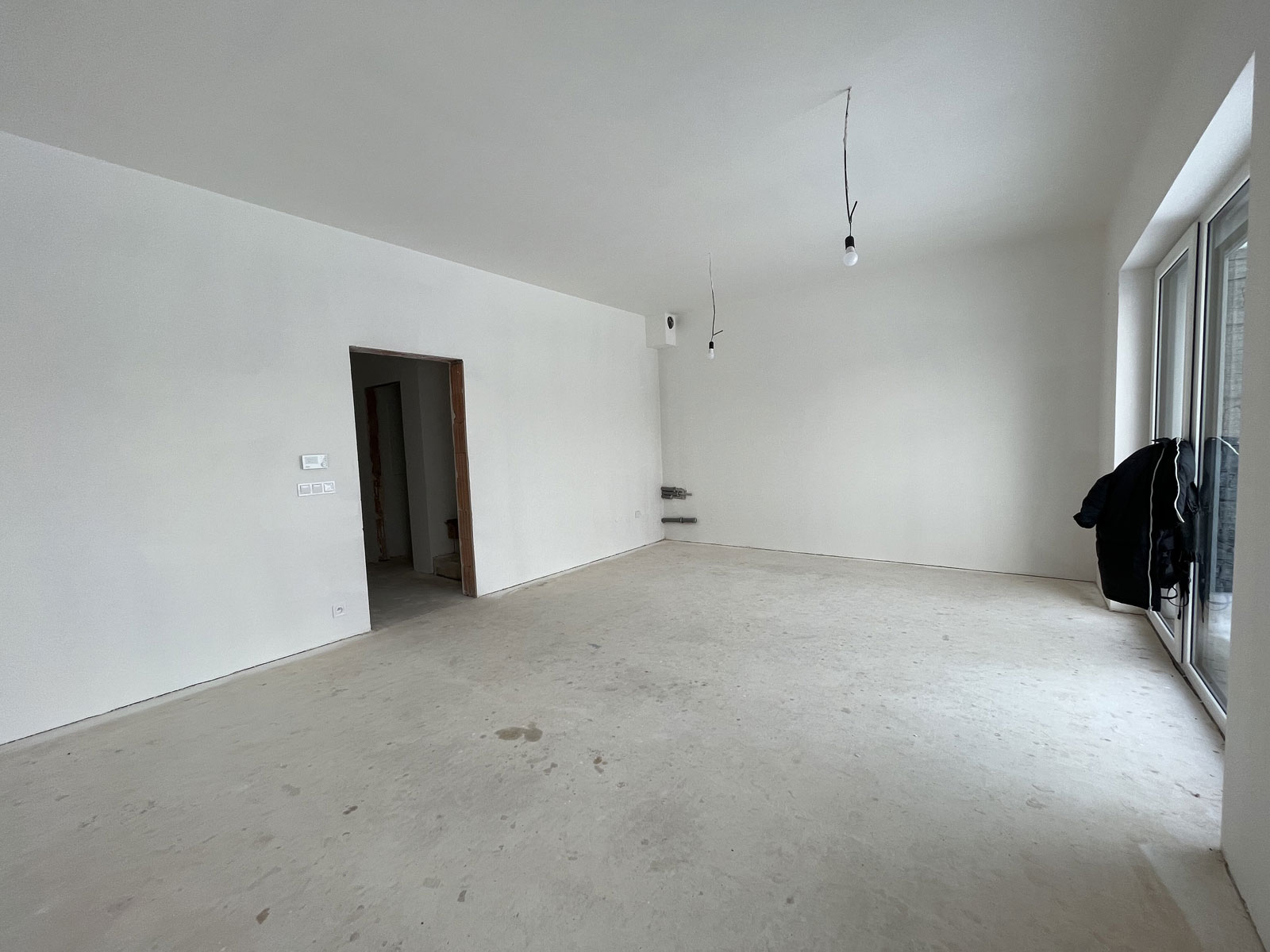
“Let’s start building and finish the design as we go.”The most expensive myth of all. The electrician has already run the cables, and then it turns out the bed will stand against a different wall. The plumber has brought out the pipes, and the basin is a metre further left in the design. Every little thing like this means cutting into the walls again.
05
“You don’t renovate in winter.”Inside a flat the weather hardly matters, as long as it is dry and warm. Demand for tradespeople is noticeably higher in summer, while in winter it is easier to find a good crew and agree on dates. Even windows are routinely replaced in winter in Czechia. The only things to watch are humidity and draughts, which neither plaster nor screed likes.
“People often come to us once building is already under way: “Make it look nice for us, the walls are already up.” And we start not with beauty but with working out what will have to be redone. Sockets behind a future wardrobe, pipes in the wrong place, a bulkhead that has swallowed the space for lighting. If the design had come first, these costs would never have existed.”
IDP Studio
Myths about supervision
06
“You need to visit the site every day.”Daily visits wear you out and make the tradespeople nervous, and mistakes still get missed if you do not know what to check. A more reliable approach is an experienced site manager, a detailed contract and checks at key stages: before the wiring is covered, after the screed, before tiling.
07
“It’s cheaper to hire different crews for different jobs.”On paper, yes. In practice, the tiler says the walls are crooked because of the plasterers, and the plasterers say the electrician held them up. Nobody is to blame and the deadlines slip. Forums are full of stories where a “cheap tradesman” ordered several times more material than needed, and the electrician drilled sockets wherever he liked, ignoring the design. When one main contractor is responsible for everything, there is someone to hold accountable. In Czechia this matters especially for warranty claims (reklamace): it is far easier to make a claim against one company than against five separate contractors.
The myth of perfect walls
08
“Every wall has to be perfectly flat.”Perfectly flat walls do not exist even with the best tradespeople, and bringing an entire flat to perfection is expensive. What matters is knowing where flatness really shows.
Where light grazes along the wall. Wall lights, wall washers, a window at the side, a long hallway. This kind of light picks out every ripple.
Where built-in furniture goes. Wardrobes and kitchens need a flat surface, otherwise a visible gap appears between the wall and the fronts.
Under dark or glossy paint. It shows everything that a light matte finish would hide.
“We often save clients money right on the walls. We look at the lighting and furniture plan and say where a perfect surface is needed and where standard quality is enough. Nobody will see an uneven patch behind a wardrobe, but under an LED strip every ripple will show.”
IDP Studio
In short
Almost every renovation myth is an attempt to save money where you shouldn’t: on the plan, the order of work and accountability. An hour over a drawing costs incomparably less than a week of rework on site.
Planning a renovation in Prague? Write to us, tell us about your flat, and we will help you figure out where to start.
Message us on WhatsApp