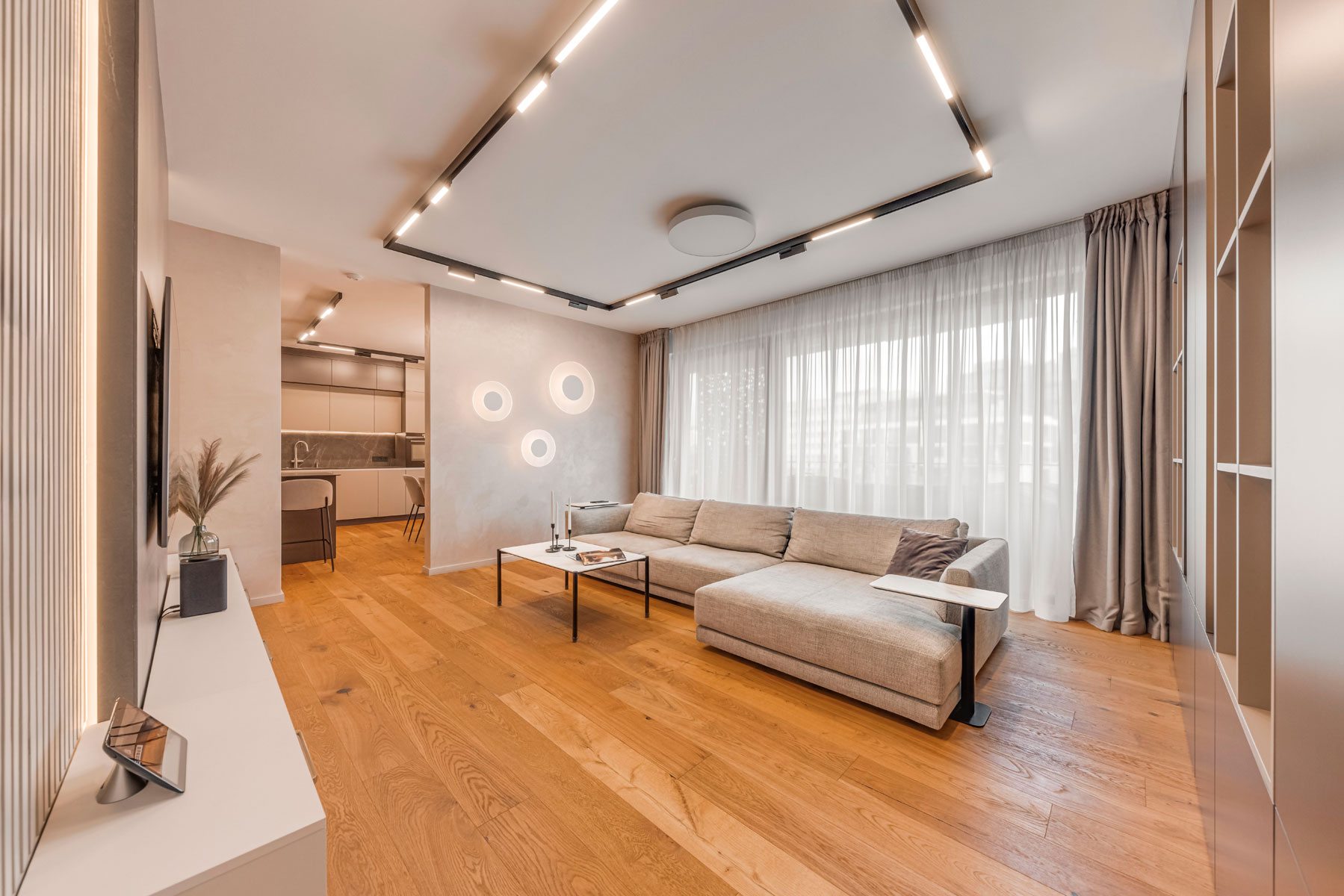
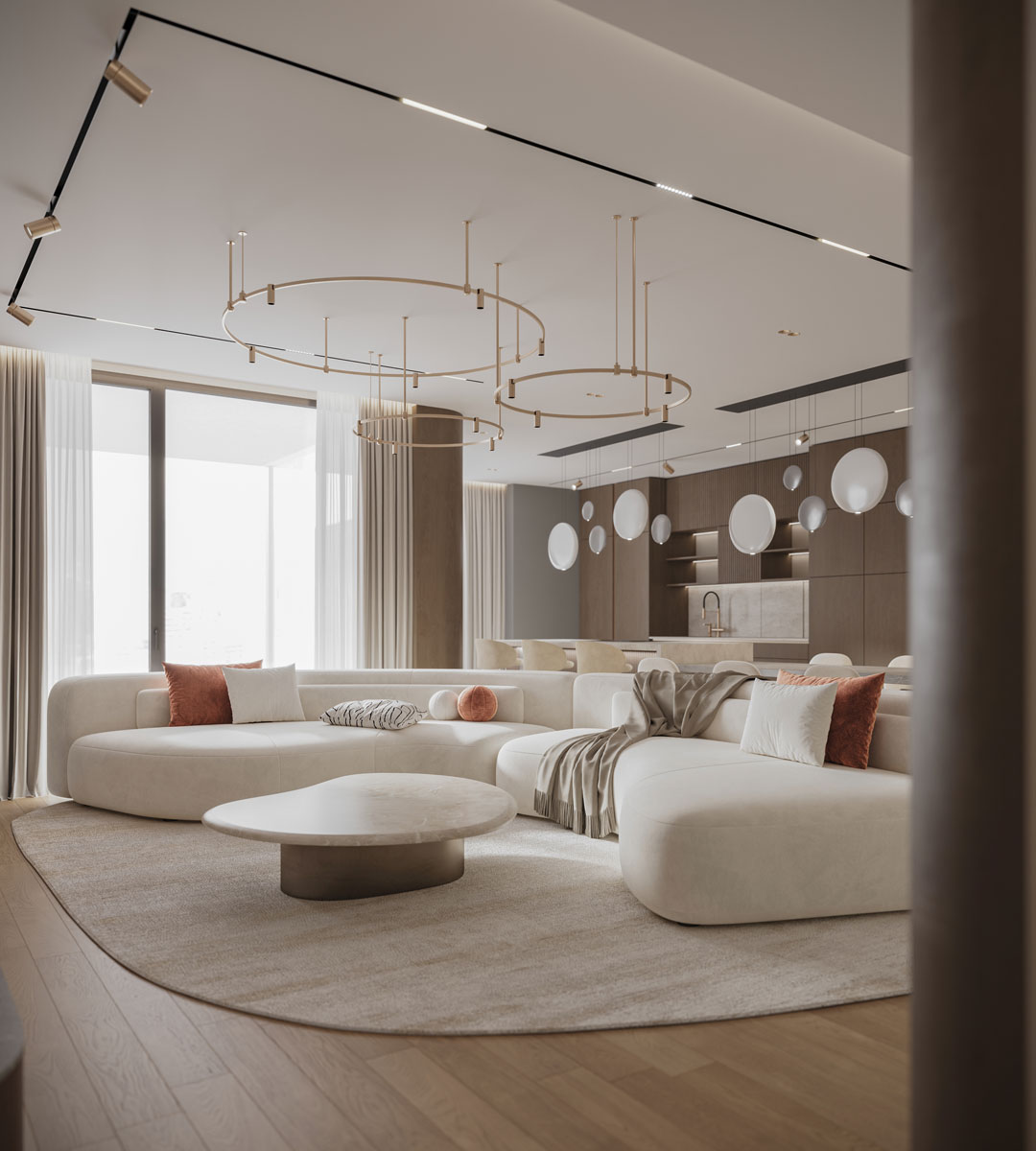
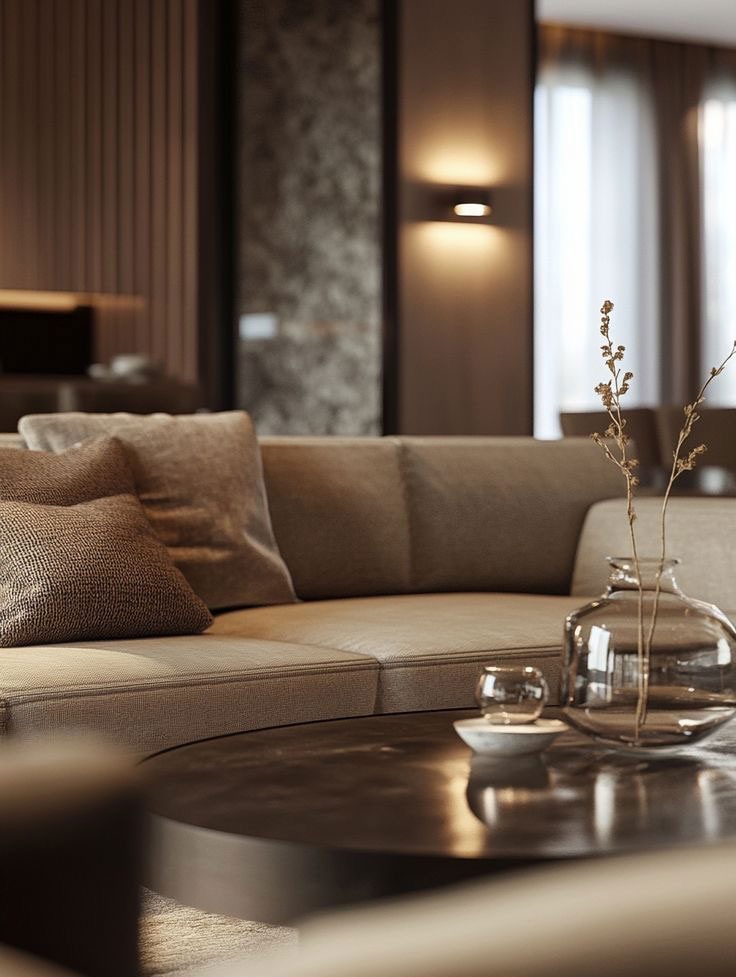
When we design a living room, the sofa almost always becomes its centre. The lighting, the rug, the coffee table, even where the TV will hang, all adjust to it. That is why a mistake with the sofa rarely stays a single mistake: it drags the whole room along with it.
Over the years we have developed our own rules for choosing a sofa. Some are obvious, others, like our dislike of legs, may surprise you. Here are the main ones, and at the end we look separately at sofa-bed mechanisms.
Tape measure first, shop second
The most common mistake is to look only at the length. In reality, every dimension matters, and so does the space around the sofa.
01
Leave a walkway. You need at least 70 cm between the sofa and the coffee table or wall to walk past comfortably with a cup in your hand.
02
The sofa should not “eat” the room. There has to be air around it. A bulky model makes a small living room feel cramped, even if it fits on paper.
03
Check the route into the room. Front door, hallway, lift, turns in the staircase. Narrow stairwells and tiny lifts are common in old Prague buildings, and forums regularly feature sofas that never made it into the flat. Modular models and removable backrests help.
04
Measure a sofa bed when it is opened out. Will the door and the wardrobe still open? Is there still a way to the window?
Shape: the simpler, the longer it lasts
First decide what you want to achieve: a sense of solidity, cosiness or a calm neutral backdrop. Ideally, the designer chooses the shape and style of the sofa together with the rest of the interior, so it does not look like a random purchase.
01
Simple shapes. They stay current for longer and suit different styles. Models with “gimmicks” that seem to shout “look how special I am” are the first to get tiresome.
02
Armrests. Wide ones look expensive but take up a lot of space. In a small room, narrow armrests or none at all work better, as on many modular sofas.
“We almost always choose sofas without legs that sit directly on the floor. That way the sofa looks calmer and more solid, and no dust collects underneath. We particularly dislike thin tapered legs and legs that steal all the attention. If legs are needed, let them be low and almost invisible.”
IDP Studio
Comfort in centimetres
01
Seat depth. The usual depth is around 50–60 cm, comfortable for sitting upright, reading and talking. A deeper seat is good for lying down, but a shorter person will be uncomfortable without a cushion behind their back. The overall depth of a sofa is usually 90–100 cm.
02
Seat height. Around 40–45 cm is comfortable. Older and taller people find a higher, firmer seat easier: it is easier to get up from.
03
Backrest. A low backrest looks lighter and more modern but does not support your head. If you like watching films half-lying, this matters.
04
The showroom test. Sit for ten minutes in the position you sit in at home. Two minutes “on the edge” tell you nothing.
What is inside matters more than the outside
01
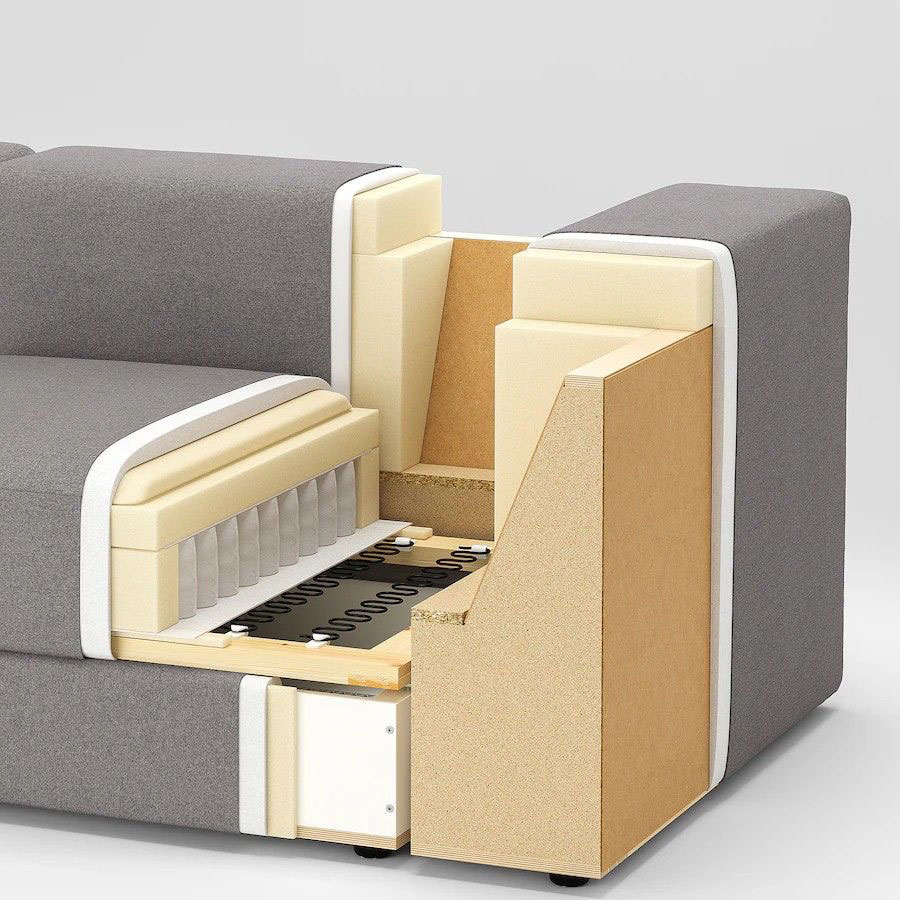
Frame. Reliable sofas are made of well-dried wood or plywood: they will not warp or start to creak. Chipboard does not last as long. Lift the sofa by one corner — it should not twist.
02
Filling. This is what decides how the sofa will look in a year. For everyday sleeping, look for high-density foam (from 28 kg/m³) or pocket springs.
03
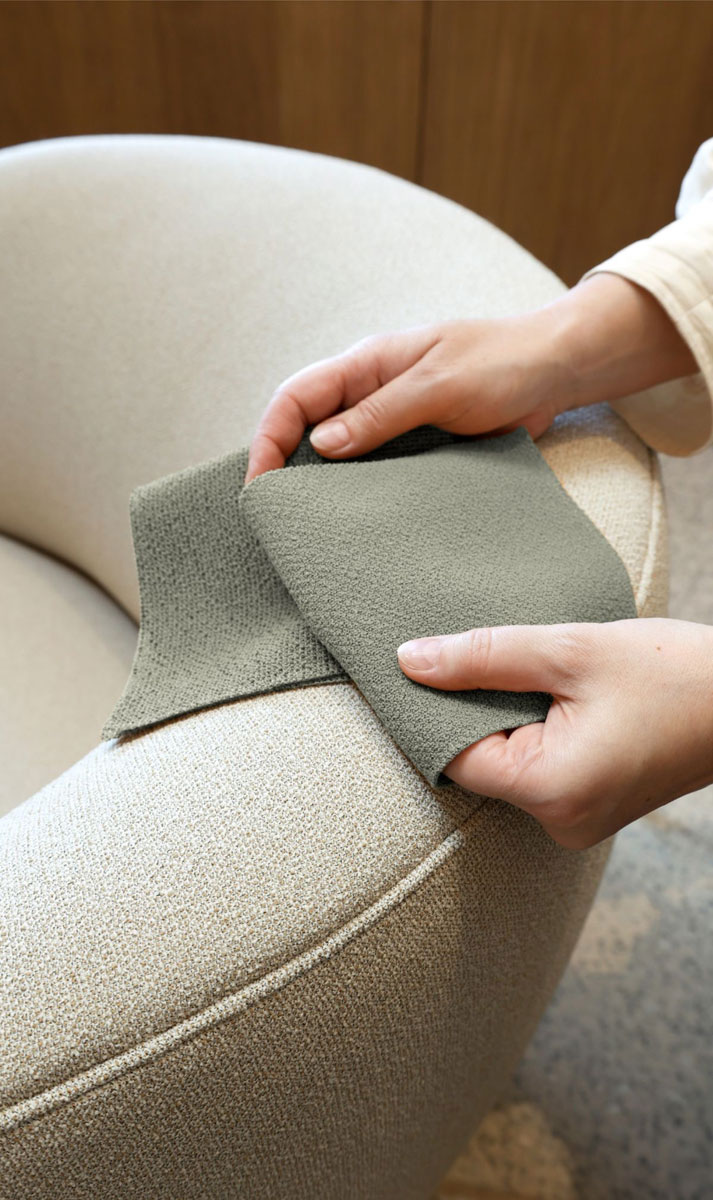
Upholstery. It can ruin a good sofa or make it better. If you have pets, it is better to avoid leather, and with small children choose a stain-resistant fabric with removable covers.
Sofa beds: it is all about the mechanism
There are very few stylish sofa beds, and besides looks, the durability of the mechanism is what counts. There are three main types:
01
Eurobook (pull-out). The seat rolls forward and the backrest folds down into its place. A simple design with almost nothing to break, storage for bedding inside, and no need to move it away from the wall. Downside: the castors can leave marks on a rug.
02
Dolphin. More common in corner sofas: a section under the seat pulls out and lifts up with one hand. Convenient, but the levers and catches wear out faster than on a eurobook.
03
Accordion. It unfolds forward like an accordion, gives a flat, wide sleeping surface and lets you use an orthopaedic mattress. But it needs a lot of free space in front of the sofa, and the design is more complex.
In Czech shops you will also often see the click-clack mechanism: the backrest folds back, so the sofa has to be pulled away from the wall.
“A typical story: someone buys a sofa with a complicated mechanism, and a month later stops opening it out because it is a whole ritual. That is why we advise opening and closing the sofa yourself about five times in the showroom. If it is awkward in the shop, it will be even worse at home. Our favourite is the eurobook: it is simple, and you can still find a truly beautiful sofa with it.”
IDP Studio
In short
A good sofa is not just a pretty picture, but the right dimensions, a simple shape, a sturdy frame and an easy mechanism. Ten minutes with a tape measure at home will save you a return, extra delivery charges and disappointment.
Furnishing a living room in Prague? Write to us, tell us about your flat, and we will help you choose a sofa that fits both the room and your life.
Message us on WhatsApp