
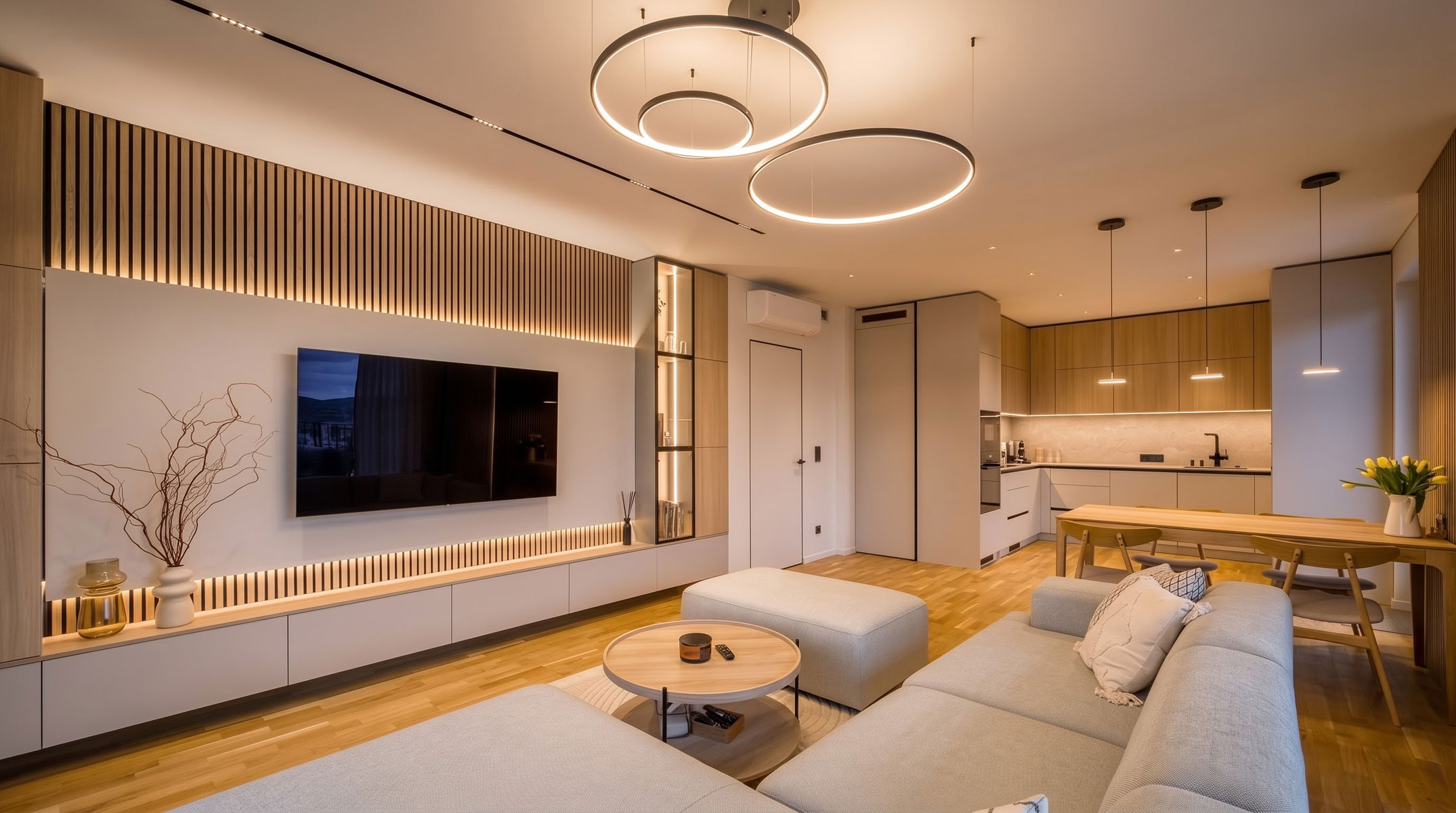
When people plan a renovation, they argue about tiles, pick a wall colour from twenty almost identical shades and spend weeks hunting for the perfect sofa. Light fittings, on the other hand, are often bought at the last minute, in one evening, from a picture online and on the principle of “let’s take these, they’re cheaper”.
And this is exactly where it is easy to lose everything that months of work and hundreds of thousands of crowns went into. We only ever see an interior the way light shows it to us. A cheap bulb turns oak parquet yellow and makes an elegant grey-beige wall look dirty. Textured plaster that you paid extra for becomes an ordinary painted wall under flat light. Colours the designer matched to each other start to clash. The design is technically there, but it does not read.
To avoid this, you need good-quality light. And that is not the same thing as a beautiful chandelier.
What good-quality light is
You hardly notice good light. You do not see glaring dots on the ceiling, you do not squint and you do not get tired. You simply see a beautiful room. This is what it is made of:
Light like this comes at a price: good diffusers, quality LEDs and flicker-free drivers cost more than mass-market fittings. But it is the investment that protects the rest of your renovation budget.
One chandelier and a scatter of spotlights: the most common mistakes
A typical scenario: a single chandelier, chosen from a photo, hangs in the middle of the living room. The centre of the room is flooded with light while the corners with the armchair and the shelf sink into shadow. Another version: spotlights placed in a grid or “wherever they ended up”. They have a narrow beam, so there is a bright spot under each one and dimness in between.
“We try to make the light come as if from the whole ceiling at once. Many sources, evenly spaced, each one soft rather than glaring. Then there are no dark corners and no blinding spots, and the interior looks exactly the way it was designed.”
IDP Studio
Two lighting modes: for tasks and for mood
When we design lighting, we always plan two modes.
Decorative lighting is an art of its own, essentially painting the interior with light. You need to choose the right LED strip and mount it in a particular way so that the light spreads softly across the surface in a smooth gradient. Done carelessly, instead of a gentle glow you get a harsh bright line or visible LED dots, and the whole effect is lost.
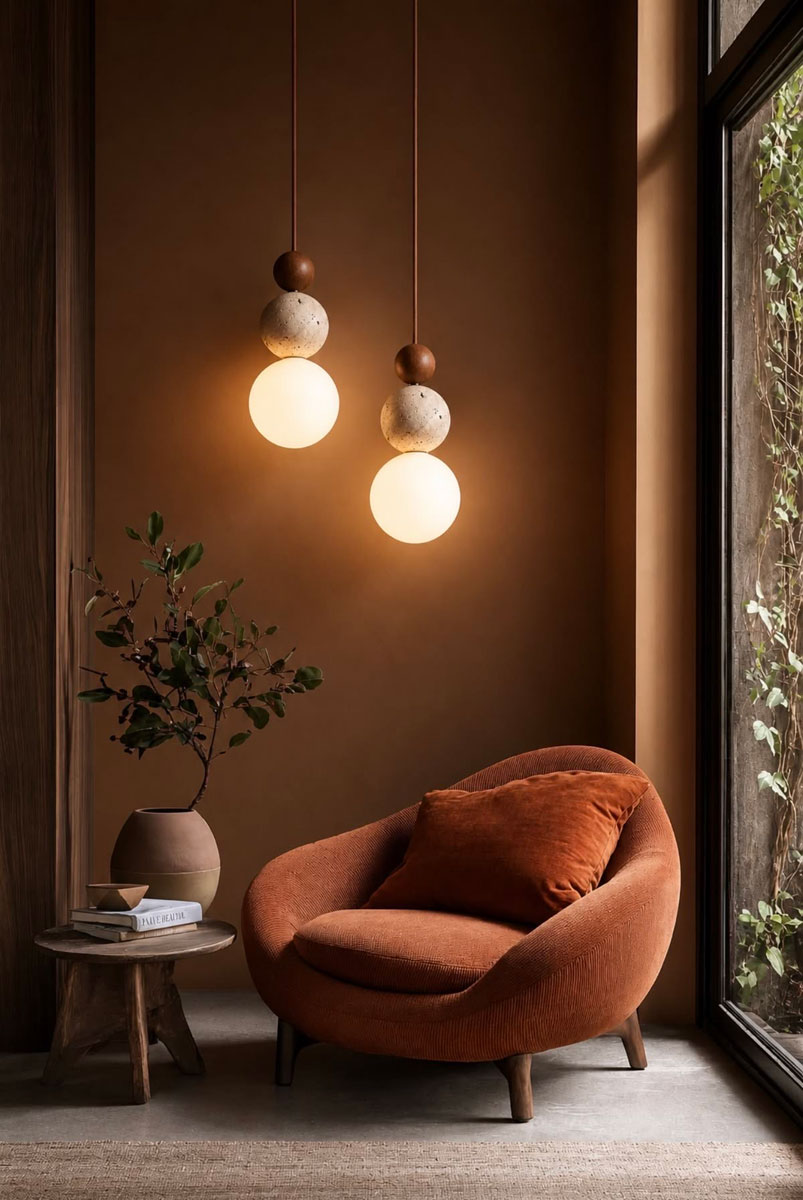
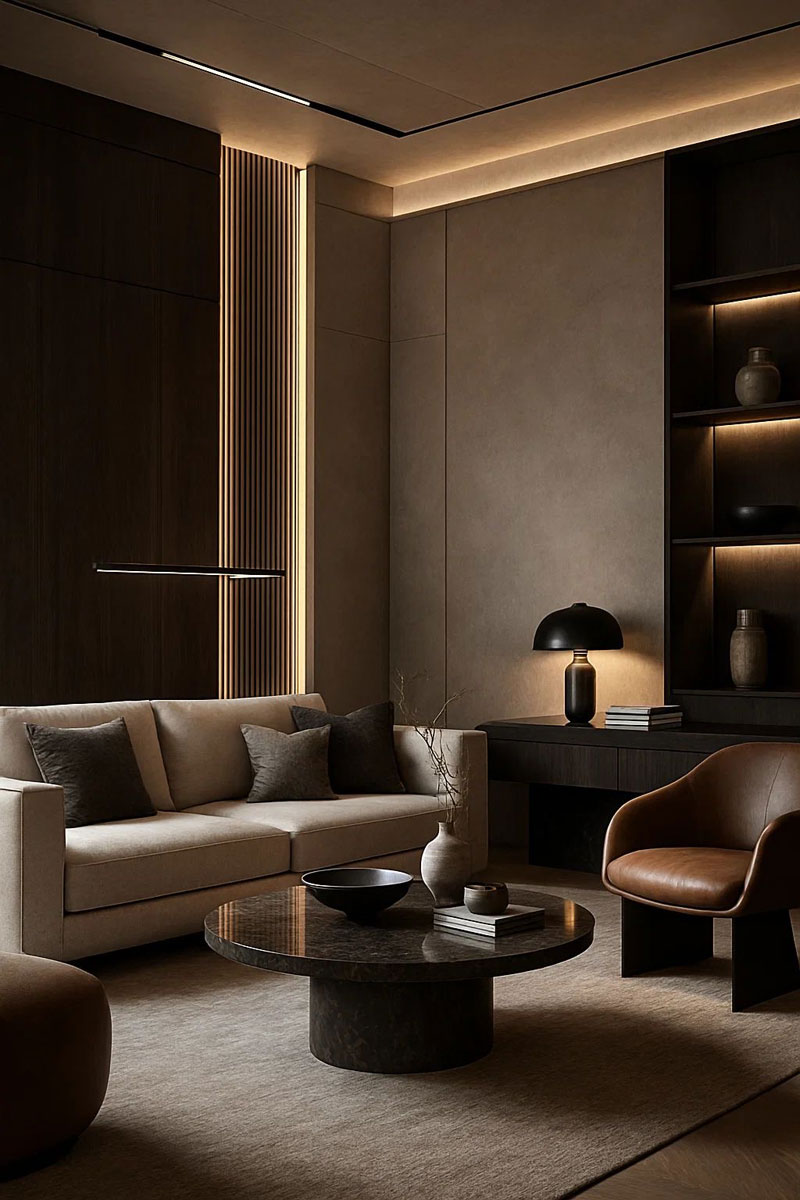
In the evening you switch on only the decorative lighting, and the living room becomes a place to unwind. Need to work or cook dinner? Add the functional light. One room lives in two modes.
Light affects how you feel, too
The body’s internal clock is set by light. During the day we need plenty of bright light, ideally daylight, and in the evening soft, warm light. Cold white light in the evening suppresses melatonin, the sleep hormone, noticeably more, which is why it can be hard to fall asleep after an evening under “office” lamps. In Czechia it gets dark early in winter, so do not block the windows with heavy curtains and tall furniture.
“Sometimes a client tells us that in their new flat they somehow get tired and irritable quickly. We start looking into it: cold bulbs, flickering spotlights, harsh light right above the sofa. We change the bulbs, add soft diffused light, and the room feels different without any renovation at all. But it is much easier to get it right from the start.”
IDP Studio
How we design lighting
When we design an interior, we give lighting as much attention as the layout and materials. Light is not added at the end; it is designed together with everything else.
“For every interior we do a lighting calculation in specialised software. It shows how much light reaches every point of the room: the sofa, the worktop, the walls. We balance and harmonise the light across the whole space and only then choose fittings with the right parameters: output, beam angle, colour temperature and colour rendering. That is why there are no random fittings in our projects. Everything is logical and considered, and every light is exactly where it belongs.”
IDP Studio
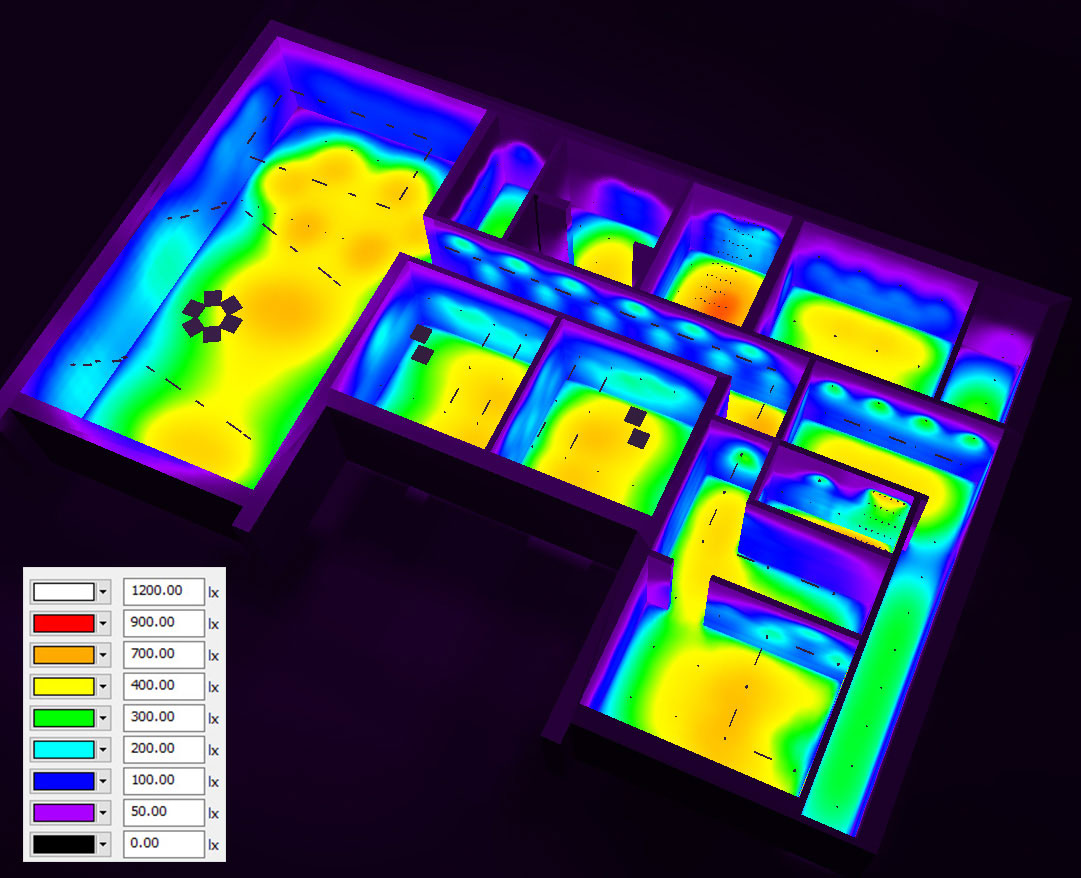
This has to be done before the renovation starts. For the ceiling to glow as one even surface, fittings, light profiles and cables are planned in at the rough-work stage, together with the ceiling structure. Adding them after the finishing work almost always means taking apart a finished ceiling. An electrician will run cables wherever you tell them, but thinking about how the room will look in the evening is not their job. That is why the project marks everything in advance: where each fitting goes, which circuit it is on, where the switches and night lights are.
In short
Good-quality light is what lets you see your interior the way it was designed. Random fittings can undermine a design worth hundreds of thousands of crowns, while well-planned light brings out every material you chose.
Planning a renovation in Prague? Write to us, tell us about your flat, and we will help you figure out where to start.