
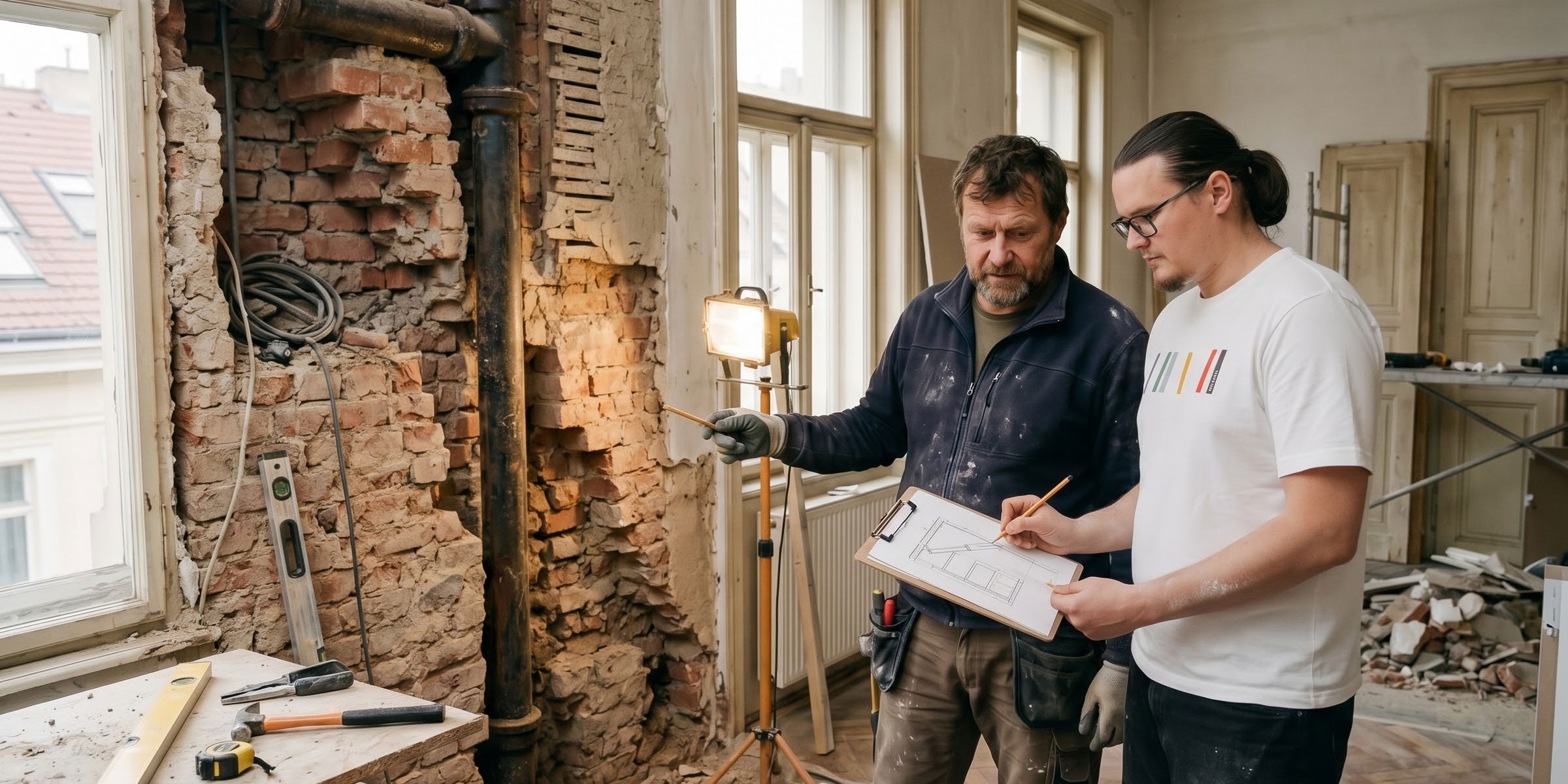
“We have a design, we have drawings. The builders are grown-ups, they’ll figure it out.” The thought is understandable: why pay again when everything is already drawn? Sometimes it really does work out — if you have plenty of free time, a financial cushion and nerves of steel.
But a design, however detailed, is only a set of instructions. Between the drawing and the finished flat lie hundreds of small decisions made right on site, often in five minutes and without you. If the author of the design is not there, they are made by whoever finds it most convenient. Let’s look at this more closely.
What it is, in plain terms
Design supervision (in Czech: autorský dozor) means that the designer who created your project accompanies the renovation: they visit the site at key moments, check the work against the drawings and help solve problems quickly when something does not go to plan.
The goal is simple: for you to get the interior you saw in the visualisation and paid for, not “something similar”.
Why builders drift from the design
Usually not out of bad intent. The reasons are almost always the same:
“Rarely, but now and then, we hear: thanks for the design, we’ll take it from here. Sometimes that works out. More often, though, things come up on site that are not visible on paper: a wall is more crooked than the survey showed, a material is temperamental, the kitchen arrived before the tiles. One wrong answer to a question like that, and the renovation drags on for weeks.”
IDP Studio
When the design meets reality
Even a perfect design runs into surprises on site. A wall turns out to be a couple of centimetres off, and the made-to-measure wardrobe no longer fits the niche. The ventilation duct ends up bigger, and the ceiling has to come down. A concealed door needs millimetre precision, and the gap was done “by eye”.
The designer solves these problems on the spot, before the crew moves on, and updates the drawings straight away. That way both you and the builders know exactly what has been agreed, and there are no disputes at the end.
When the designer needs to be on site
What matters are the stages after which a mistake can no longer be fixed without demolition:
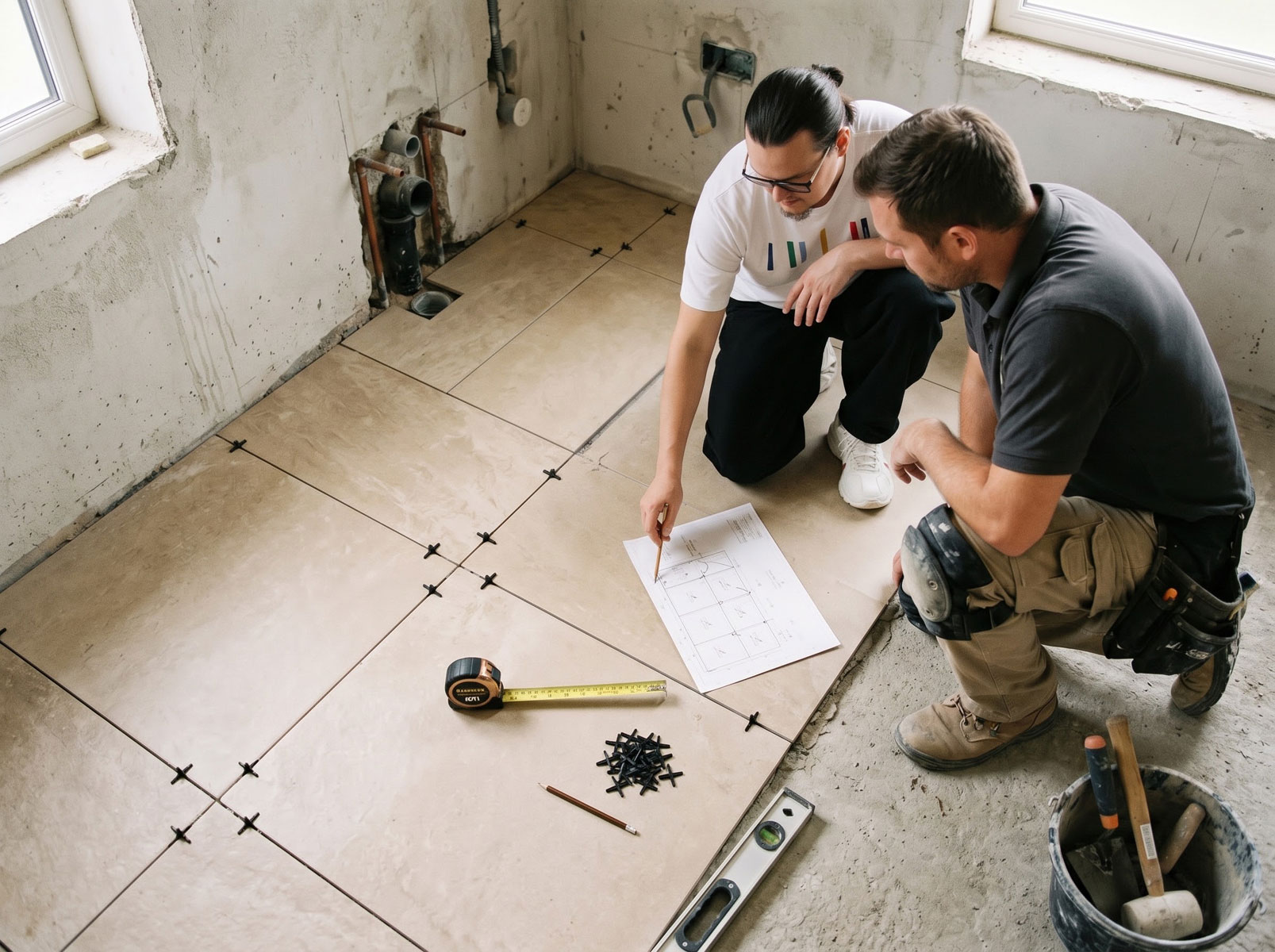
An uneven row of tiles spotted on day one is fixed in an hour. The same row after grouting means relaying the entire wall.
What design supervision includes
At the same time, the designer does not replace the site manager. Checking construction methods (waterproofing, screed, pipework) and organising the build remain their responsibility. In Czechia the site manager (stavbyvedoucí) is accountable for the quality of the work, and for independent oversight you can hire technical supervision (technický dozor).
Procurement: a separate service that takes away the biggest headache
Procurement means the designer takes over everything that needs to be bought for the renovation: from tiles and taps to lighting, doors and furniture. It is not part of supervision but a separate service ordered on top of it. Yet it is together that they work best.
What it includes:
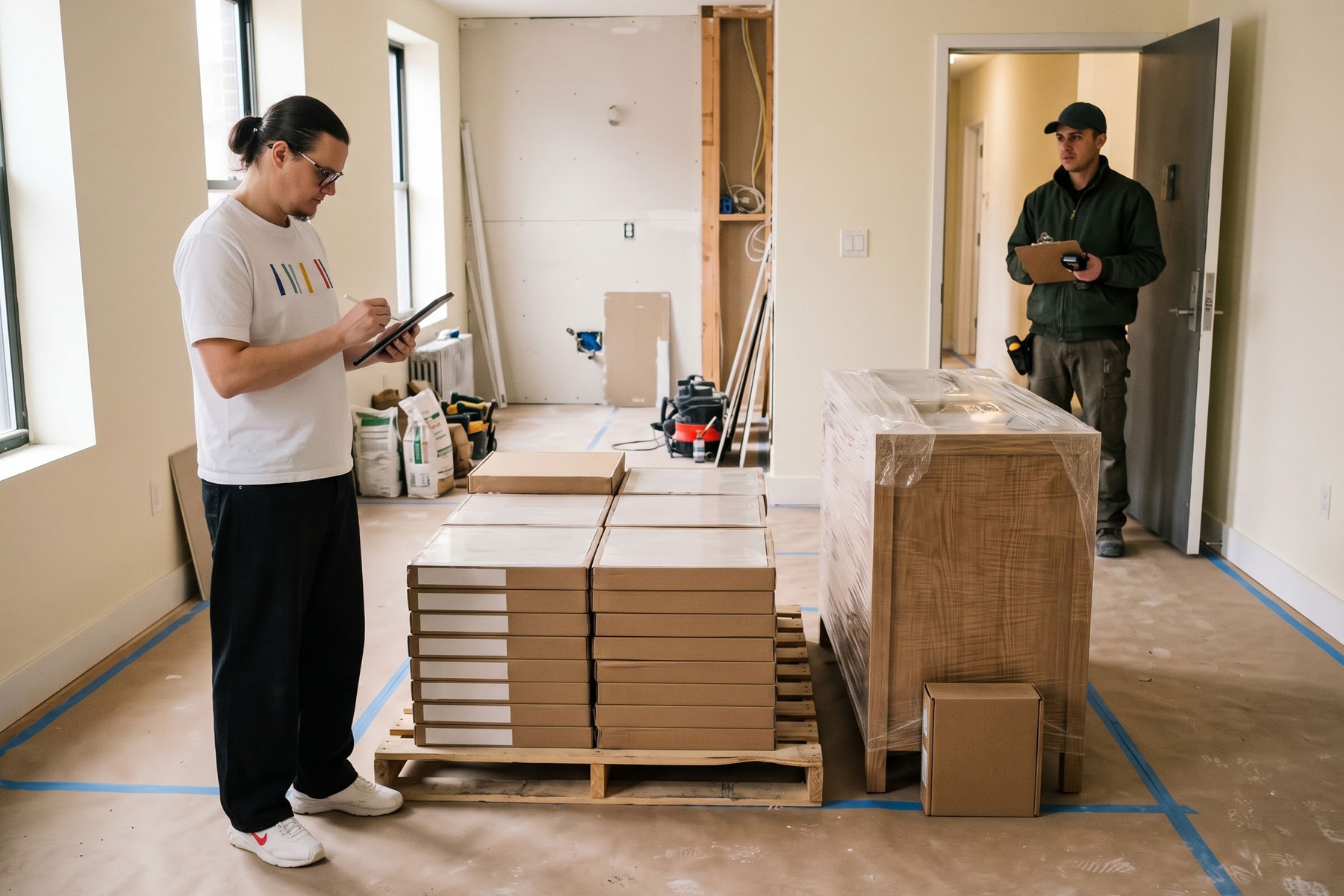
Why does this matter so much? A renovation involves hundreds of items, and many of them take weeks to arrive, made-to-measure furniture and doors even longer. One forgotten or late order brings the whole crew to a halt. And tiles from two different batches can differ in shade so much that you notice it from the doorway.
What happens if you take it all on yourself
You can do without supervision and procurement. But it is important to understand honestly what that means, especially if you have never renovated before.
In effect, you become the project manager. On forums, these stories sound remarkably alike:
In the end, saving on supervision and procurement often turns into rework, downtime and unnecessary purchases — and above all, several months of your life spent on the building site instead of on work, family and rest.
“A design without supervision is like having a suit made to measure and leaving the fitting to a random stranger. We know best what was drawn and why, so we are the quickest to see where something has gone wrong on site. Meanwhile, the client calmly gets on with their life and comes to see the result.”
IDP Studio
In short
The design defines what your home will be like. Supervision makes sure it actually turns out that way, and procurement makes sure everything you need is there on time. A mistake caught in time is fixed in an hour; one found after the renovation takes weeks and tens of thousands of crowns.
Planning a renovation in Prague? Write to us, tell us about your flat, and we will help you figure out where to start.